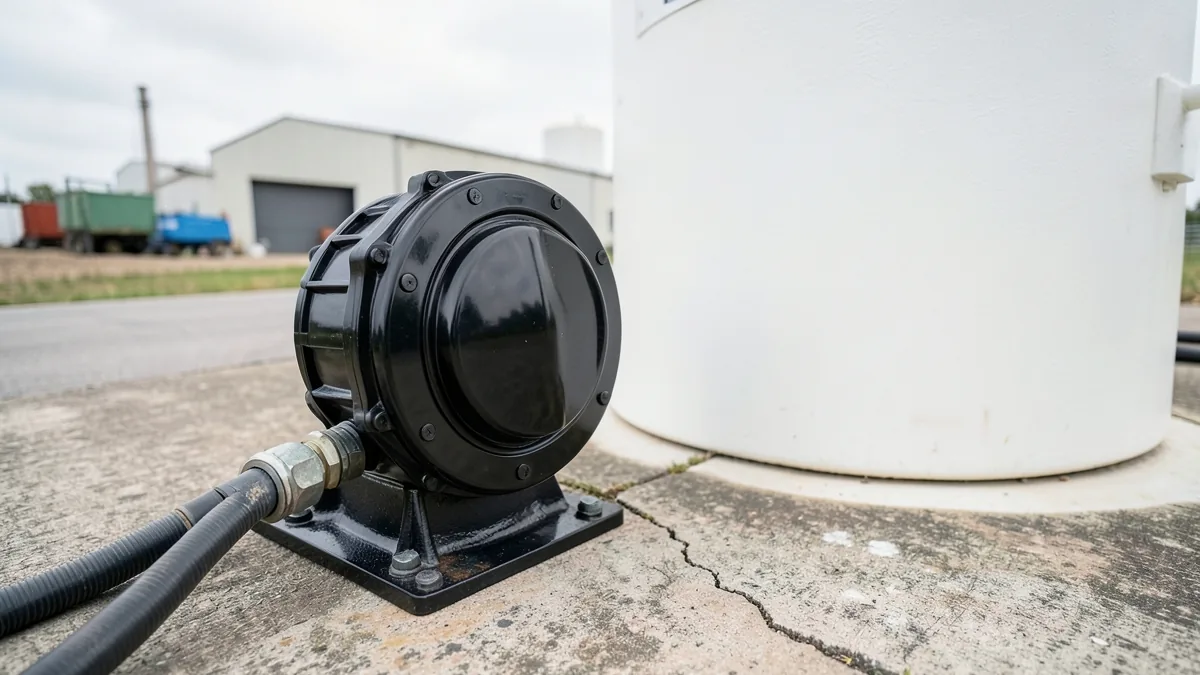
A pump spends its whole working life in contact with whatever runs through it. That makes choosing a pump material for corrosive fluids less about the pump and more about the fluid. Water, fertilizer, salt brine, and seawater each treat a pump housing differently. The wrong match shows up as rust, pitting, leaks, and a pump that struggles to prime. Pacer Pumps manufactures self-priming centrifugal pumps molded from thermoplastics in Lancaster, Pennsylvania, serving agriculture, aquaculture, marine, farm, and industrial markets since 1974.
Why the Fluid Decides the Material
Cast iron is a ferrous metal. In clean water it holds up well, and its weight and stiffness suit pedestal mounts and heavy duty work. Corrosive fluids are a different story. Purdue Extension’s guide to steel tanks for pesticides and fertilizers explains that low pH products are hard on mild steel. It adds that ammonium thiosulfate corrodes carbon steel even near a neutral pH. Liquid potash is hard on mild steel too. Iron and steel react to many of the same fluids. A cast iron housing in that service can run into the same trouble.
Corrosion inside a pump does more than look bad. Pitting roughens the inside of the casing, and rust flakes travel downstream. A corroded housing can also lose the close fit a self-priming pump needs to pull air out of its suction line. That is one reason a pump starts losing prime. Our guide to self-priming pump wear parts covers how to trace that symptom.
How Thermoplastic and Cast Iron Compare
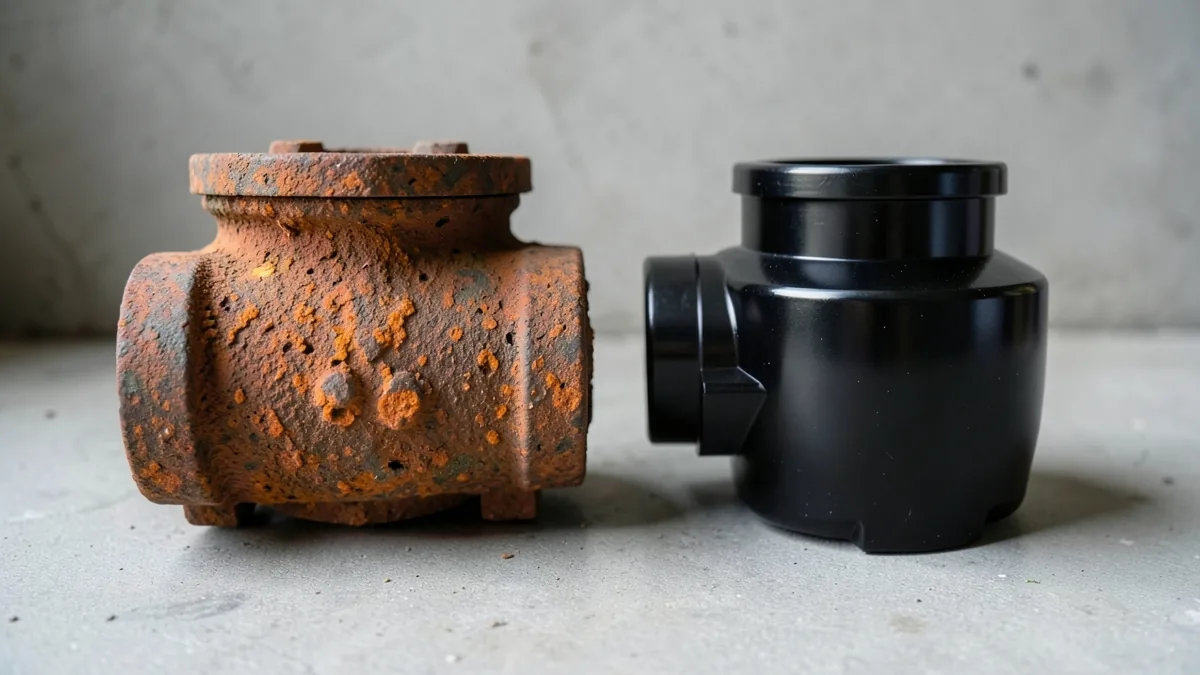
Thermoplastics such as polypropylene do not rust. A molded thermoplastic housing is typically lighter than cast iron, which matters on a sprayer, a nurse trailer, or a boat deck. Plastic has its own limits too. Thermoplastics typically carry lower temperature and pressure ratings than metal, and resistance varies by chemical. A plastic that handles one fluid well can be the wrong choice for another.
Here is how the two materials compare in general terms:
- Corrosion: cast iron rusts in many corrosive fluids and in saltwater, while thermoplastics do not rust and their chemical resistance depends on the specific plastic and fluid
- Weight: cast iron is heavier, and thermoplastic is typically lighter and easier to move
- Temperature and pressure: cast iron generally tolerates more of both, and thermoplastics carry lower limits that vary by material
- Typical fit: cast iron suits clean water at higher temperatures, and thermoplastic suits fertilizer, brine, saltwater, and other corrosive service where its compatibility data supports the fluid
Stainless steel is the third option. It resists many corrosive fluids, but it costs more up front, and grades differ. Purdue’s guide recommends grade 316 over 304 for tanks holding strongly acidic products, for example.
Is a Plastic Pump as Durable as a Cast Iron Pump?
In corrosive service, durability depends on what attacks the pump first. A cast iron pump moving liquid fertilizer can fail from corrosion long before it wears out mechanically. A thermoplastic pump does not rust, provided its material is compatible with that chemical at that concentration and temperature. In clean, hot water, cast iron often has the edge.
The Cost of Getting It Wrong
Corrosion is expensive across the whole economy. NACE, now AMPP, published a cost of corrosion study in 2002 with backing from the Federal Highway Administration. It estimated the annual cost of corrosion in the United States at $276 billion. For a single operation, the cost is smaller but sharper. It looks like a failed pump in the middle of application season, a spill to clean up, and the hunt for a replacement.
Choosing a Pump for Your Fluid
Start with the fluid, its concentration, and its temperature. Check those against the material’s published compatibility data before anything else. From there, size the pump for the job. Our guide on how to size a transfer pump walks through flow rate, suction lift, and head.
Pacer Pumps: Self-Priming Pumps from Lancaster, Pennsylvania
Pacer Pumps has manufactured self-priming centrifugal pumps since 1974, molded from thermoplastics and assembled in Lancaster, Pennsylvania. Eight series and six drive configurations cover agriculture, aquaculture, marine, farm, and industrial work.
Find Your Pump:
- Agriculture Transfer Pumps: Fertilizer, herbicide, and insecticide transfer, plus irrigation
- Pacer Pump Series: Compare Pacer’s eight pump series
Not sure which series fits your fluid?
Talk to Pacer with your chemical, flow rate, and suction lift.
Works Cited
- “Cost of Corrosion Study.” AMPP, Association for Materials Protection and Performance, www.ampp.org/resources/cost-of-corrosion-study. Accessed 29 Oct. 2026.
- Whitford, Fred, et al. Steel Tanks for Storing and Transporting Pesticides and Fertilizers. PPP-105, Purdue University Extension, ag.purdue.edu/department/extension/ppp/resources/ppp-publications/mobile/ppp-105/steel-tanks-for-storing-and-transporting-pesticides-and-fertilizers.html. Accessed 29 Oct. 2026.
Frequently Asked Questions
01Does saltwater corrode a cast iron pump?
Yes. Saltwater speeds up rust on cast iron and other bare iron surfaces, so a cast iron housing in seawater or brine service can pit and scale over time. Thermoplastic housings do not rust, which makes thermoplastic worth considering for seawater and brine work. Check the seal and fastener materials too, since they also touch the fluid.
02Is stainless steel better than plastic for chemical transfer?
Not in every case. Stainless steel resists many chemicals and tolerates higher temperatures, but it costs more, and some grades corrode in certain acids and chlorides. Thermoplastic resists many chemicals that attack metal at a lower cost. The right choice depends on the chemical, its concentration, and the operating temperature.
03Can a thermoplastic pump handle hot water?
It depends on the specific plastic and the pump’s published rating. Thermoplastics typically carry lower temperature limits than cast iron or stainless steel, and their strength drops as temperature rises. Check the maximum fluid temperature on the pump’s specification sheet before running hot water or heated chemicals through a thermoplastic pump.
04Will a plastic pump handle liquid fertilizer?
Pacer molds its agriculture transfer pumps from thermoplastic for fertilizer work, but compatibility depends on the specific product, its concentration, and the operating temperature. Check every wetted material, including the housing, impeller, and seal elastomers, against chemical resistance data for that fertilizer before you choose a pump. The Pacer team can help match a pump to your product.
05How do I check if a pump material is compatible with my chemical?
Start with the pump’s wetted materials on its specification sheet: the housing, impeller, seal faces, and elastomers. Compare each one against a chemical resistance chart for your chemical at your concentration and temperature. If any material rates poorly or is not listed, ask the pump manufacturer before you buy.