
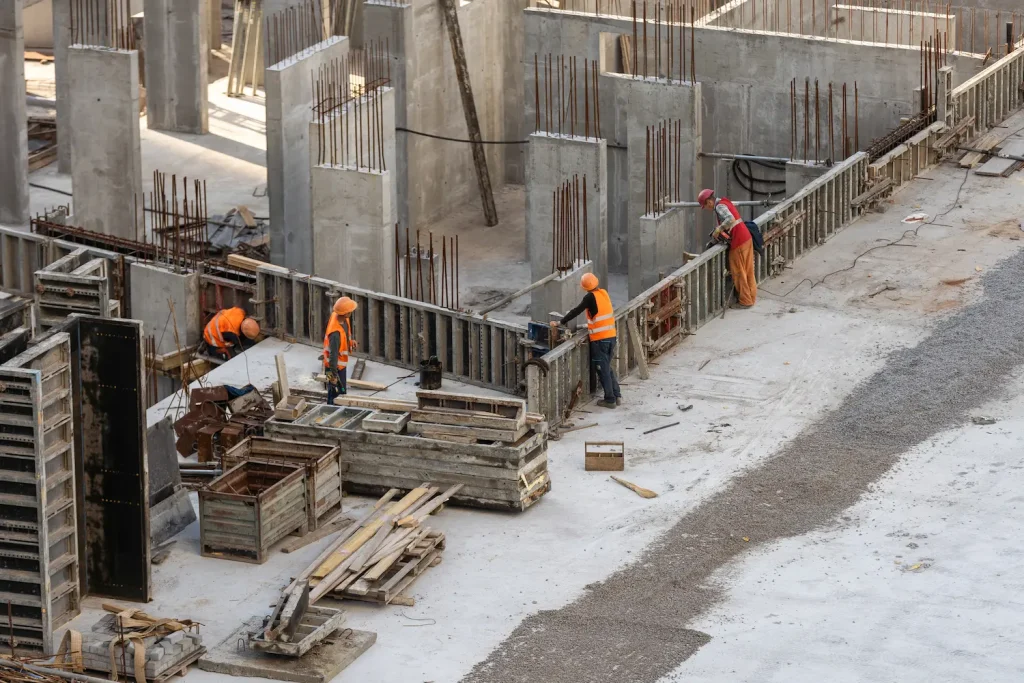
The $8 billion global dewatering pump market tells a story of mounting pressure on construction sites worldwide. As extreme weather events become more frequent and infrastructure projects grow more ambitious, contractors face water management challenges that can make or break project timelines and budgets. The demand for reliable dewatering solutions has never been higher—or more urgent.
Construction industry professionals know the scenario well: unexpected groundwater seepage flooding an excavation, storm runoff overwhelming temporary drainage systems, or standing water delaying foundation work for days. These disruptions carry real costs. Project delays, equipment damage, and safety hazards all trace back to inadequate water management on active job sites.
The challenge extends beyond simple inconvenience. Water infiltration compromises soil stability, creates hazardous working conditions, and can cause structural issues that manifest months or years after project completion. For contractors operating on tight margins and tighter schedules, effective dewatering has become a critical competency rather than an afterthought.
Market Growth Reflects Industry Pressure
According to Future Market Insights’ analysis of the dewatering pump sector, the global market reached $8 billion in 2025 and is projected to grow to $10 billion by 2035. Infrastructure and mining applications dominate at 37 percent of market share, while construction represents a substantial and growing segment driven by urbanization and development pressures worldwide.
The growth trajectory reflects fundamental shifts in how construction projects must approach water management. Climate variability means contractors can no longer rely on historical weather patterns when planning excavation and foundation work. A site that stayed dry for decades might now experience repeated flooding events that demand permanent pumping solutions rather than occasional intervention.
Regional dynamics vary significantly. India leads global growth projections at 2.9 percent annually through 2035, driven by massive infrastructure programs. China follows at 2.8 percent amid continuing urbanization. The United States maintains steady expansion at 2.5 percent as aging infrastructure requires replacement and extreme weather events increase demand for robust site protection.
These numbers represent real contractors facing real challenges. When a construction site floods, project managers don’t consult market reports—they need pumps that work, immediately and reliably.
Technology Evolution Meets Practical Demands
The dewatering equipment landscape has evolved considerably from the simple trash pumps that served construction sites for generations. Modern systems incorporate electronic monitoring, automated operation, and efficiency improvements that reduce fuel consumption and maintenance requirements. Yet the fundamental requirement remains unchanged: moving water reliably under demanding field conditions.
Centrifugal pump technology continues dominating the market through its combination of simplicity, reliability, and cost-effectiveness. Self-priming designs prove particularly valuable for construction applications where pump positioning may change frequently and operators cannot always ensure flooded suction conditions. The ability to evacuate air from suction lines and begin pumping without manual priming saves time and reduces the expertise required for effective operation.
Understanding how these broader market dynamics connect to specific flooding risks helps contractors plan more effectively. The financial exposure from inadequate preparation, explored in [America’s Flood Insurance Gap: Why $144 Billion in Damage Left Property Owners Exposed], applies equally to construction sites where project investments face weather-related threats.
Drive system selection increasingly reflects site-specific requirements. Electric pumps offer advantages for urban construction where noise restrictions and emission concerns limit diesel operation. However, diesel-driven pumps maintain dominance for remote sites and emergency applications where electrical power availability cannot be guaranteed. The flexibility to operate independently of grid power proves essential when storms knock out utilities precisely when pumping needs peak.
Weather Volatility Compounds Planning Challenges
Construction scheduling has always required weather contingency planning, but recent years have tested even conservative assumptions. The pattern of more intense precipitation events separated by longer dry periods creates particular challenges for excavation and foundation work. Sites may remain dry for weeks, then experience flooding that overwhelms drainage systems designed for historical rainfall patterns.
The La Niña conditions developing for winter 2025-2026 illustrate how seasonal forecasts should inform construction planning. As detailed in [La Niña Winter 2025-2026: NOAA Forecasts Flooding Rains as Northern States Brace for Wet Season Ahead], northern tier states face elevated probability of above-normal precipitation through February. Contractors with active excavations in affected regions should evaluate whether current dewatering capacity matches potential conditions.
Emergency response capability becomes critical when weather forecasts prove accurate—or underestimate actual conditions. Having appropriate pump capacity on site or readily available can mean the difference between minor delays and catastrophic project disruption. The February 2025 flooding across Kentucky, West Virginia, and Virginia demonstrated how quickly conditions can overwhelm unprepared sites, with some areas receiving flooding not seen since 1984.
Smart contractors maintain relationships with equipment suppliers who can respond quickly when conditions deteriorate. Rental availability tightens rapidly during regional weather events as multiple sites compete for limited equipment inventory. Owning appropriate dewatering equipment eliminates this vulnerability while providing immediate response capability.
Practical Considerations for Equipment Selection
Selecting appropriate dewatering equipment requires matching pump capabilities to site-specific conditions. Flow rate requirements depend on the volume of water requiring removal—both steady-state seepage and potential surge capacity during storm events. Head capacity must account for vertical lift from excavation depth plus friction losses through discharge piping. Solids handling capability matters when pumping water containing sand, silt, or construction debris.
The 30 to 100 meter head capacity segment commands approximately 44 percent of the global market, reflecting the predominance of medium-depth applications in construction and infrastructure work. Pumps in this range handle most foundation excavations, utility trenches, and general site dewatering while maintaining the portability and operational simplicity that field conditions demand.
Reliability under continuous operation often determines equipment value more than specifications suggest. A pump rated for higher flow means nothing if it fails during extended operation or requires constant attention from skilled operators. Construction sites need equipment that runs unattended for hours or days, starting reliably after sitting idle and operating through conditions that would challenge more delicate machinery.
Maintenance accessibility affects total cost of ownership significantly. Pumps designed for field service—with accessible wear components, standard fasteners, and logical internal arrangements—minimize downtime when service becomes necessary. Equipment requiring factory service or specialized tools creates vulnerabilities that compound during weather emergencies when rapid response matters most.
Risk Management Through Preparation
Effective dewatering represents risk management rather than simply equipment procurement. The costs of inadequate water control—project delays, structural remediation, safety incidents, and insurance claims—dwarf the investment in appropriate pumping capacity. Yet many contractors underestimate requirements until experience teaches expensive lessons.
Insurance considerations increasingly factor into dewatering decisions. Policies may require documented water management plans for excavation work, and claims resulting from preventable flooding face scrutiny that can affect coverage and future premiums. Demonstrating appropriate preparation through equipment investment and operational procedures strengthens positions when claims become necessary.
The construction industry’s competitive pressures make weather delays particularly costly. Projects bid on tight margins cannot absorb extended schedule impacts without financial consequences. Contractors who maintain reliable dewatering capability protect not just individual projects but their reputations and ongoing viability in demanding markets.
Pacer Pumps: Your Water Transfer Solution Partner
At Pacer Pumps, we’ve manufactured reliable water transfer pumps and self-priming centrifugal pumps since 1976. Our equipment serves contractors, agricultural operations, and property owners who need dependable performance when water management matters most.
Our Products Include:
- Water Transfer Pumps – Self-priming centrifugal pumps engineered for demanding field conditions and continuous operation
- Custom configurations for specific flow, head, and drive requirements
Ready to Address Your Water Management Needs? Contact Pacer Pumps to discuss equipment options that match your operational requirements.
Works Cited
“Dewatering Pump Market | Global Market Analysis Report – 2035.” Future Market Insights, www.futuremarketinsights.com/reports/dewatering-pumps-market. Accessed 24 Nov. 2025.
Related Articles
- [La Niña Winter 2025-2026: NOAA Forecasts Flooding Rains as Northern States Brace for Wet Season Ahead]
- [America’s Flood Insurance Gap: Why $144 Billion in Damage Left Property Owners Exposed]