
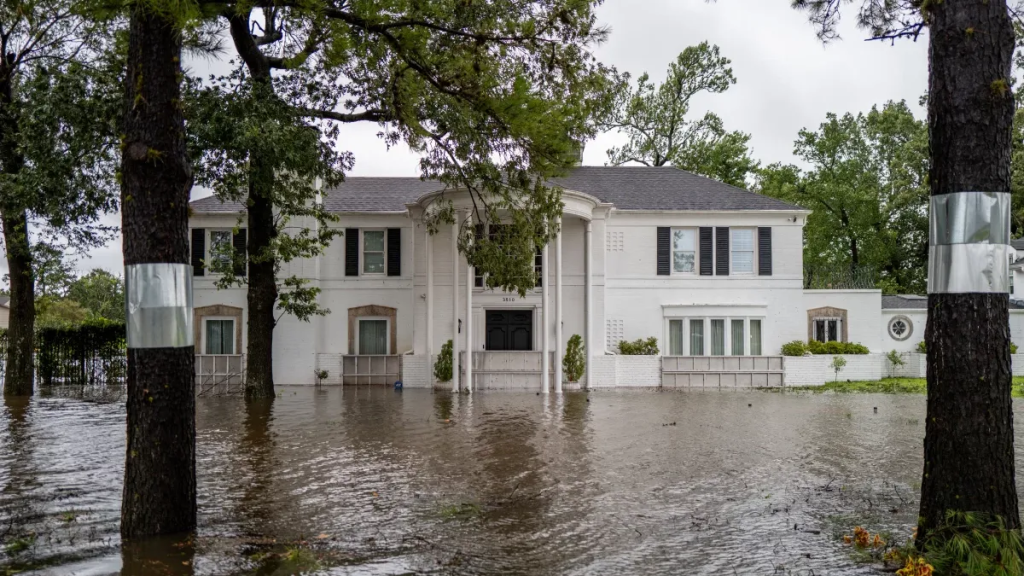
Winter 2025-2026 is shaping up to challenge communities across the northern United States with above-normal precipitation, flooding risks, and the return of La Niña conditions that historically bring wetter weather patterns to vulnerable regions. The National Oceanic and Atmospheric Administration released its official winter outlook in November 2025, confirming that La Niña conditions have emerged and are expected to persist through at least February 2026. For property owners, contractors, and emergency responders, these forecasts signal that winter flooding preparedness should move to the top of priority lists before the wet season intensifies.
According to NOAA’s Climate Prediction Center winter outlook, wetter-than-average conditions are favored for the entire northern tier of the continental United States from December through February. The Pacific Northwest and Great Lakes regions face particularly elevated precipitation probabilities, with some areas showing a 40 percent or greater chance of above-normal precipitation. This forecast arrives as La Niña conditions strengthen, with sea surface temperatures in the central and eastern equatorial Pacific Ocean falling below average—a pattern that typically shifts storm tracks northward and intensifies precipitation across northern states while leaving southern regions warmer and drier.
Understanding La Niña’s Impact on Winter Flooding
La Niña represents the cooler phase of the El Niño-Southern Oscillation cycle, and its effects on North American weather patterns are well documented through decades of historical data. When La Niña is active, stronger-than-normal surface winds develop across the tropical Pacific, creating a ripple effect that pushes the jet stream northward over the United States. This atmospheric shift concentrates storm activity across the Pacific Northwest, Northern Rockies, Great Plains, and Ohio Valley while suppressing precipitation in southern states.
Historical La Niña winters show consistent patterns of increased flooding risk in specific regions. NOAA’s analysis of 25 La Niña winters since 1949 reveals that wetter conditions have become more frequent in recent decades, with six of the 13 La Niña events since 1991 ranking among the wettest third of all winters on record. The Ohio Valley and Pacific Northwest consistently experience above-average precipitation during these events, with wetter conditions appearing in roughly half of all La Niña winters. This pattern creates compounding flood risks when heavy precipitation falls on frozen or saturated ground, leading to rapid runoff that overwhelms drainage systems and waterways.
The 2025 Context: A Year of Devastating Floods
This winter’s flooding concerns arrive after a year that demonstrated the catastrophic potential of flood events across the United States. The February 2025 storm system that swept across Kentucky, West Virginia, Virginia, and Tennessee killed at least 18 people and required more than 1,000 water rescues in Kentucky alone. The North Fork Kentucky River crested at over 30 feet—14 feet above flood stage—marking the worst flooding the region had experienced since 1984. Simultaneously, West Virginia Governor Patrick Morrisey declared states of emergency across 13 counties as major flooding along the Tug Fork and Bluestone Rivers forced evacuations and destroyed roads.
The scale of flood-related destruction continues to escalate nationally. Climate Central’s analysis of NOAA billion-dollar disaster data shows that from 1980 through 2024, the United States suffered 403 weather and climate disasters exceeding one billion dollars each, with total damages surpassing 2.9 trillion dollars. Flooding events represent a significant portion of these catastrophic losses, and the trend line points toward increasing frequency and severity. The first half of 2025 was the costliest on record for weather disasters, with flooding from severe thunderstorms contributing substantially to the destruction.
Regional Outlook: Where Flooding Risks Run Highest
NOAA’s precipitation outlook identifies several regions facing elevated winter flood risk. The Pacific Northwest leads the list, with above-normal precipitation probabilities exceeding 50 percent across portions of Washington, Oregon, and northern California. This region’s combination of steep terrain, saturated soils from autumn rains, and atmospheric river events creates conditions where flooding can develop rapidly and cause extensive damage.
The Northern Rockies and Northern Great Plains face similar elevated precipitation risks through February. Communities in Montana, the Dakotas, and northern Minnesota should prepare for above-normal snowfall that, when combined with spring thaw, creates secondary flooding threats extending into March and April. The Great Lakes region and Ohio Valley round out the high-risk areas, with wetter conditions favored from the Upper Mississippi Valley south through Indiana and Ohio. These regions often experience the most severe La Niña flooding impacts during winter months, as detailed in [America’s Flood Insurance Gap: Why $144 Billion in Damage Left Property Owners Exposed]—a pattern that underscores why proactive water management matters for property protection.
Preparing Properties for Winter Flooding
Property owners in high-risk regions should assess their flood preparedness before winter precipitation intensifies. Drainage systems require inspection and clearing to ensure they can handle above-normal water volumes. Gutters, downspouts, and French drains clogged with autumn leaves create bottlenecks that force water toward foundations rather than away from structures. Low-lying areas around buildings should be graded to promote drainage, and any depressions that collect standing water need attention before freeze-thaw cycles begin.
Water removal equipment represents a critical component of flood preparedness that many property owners overlook until emergencies strike. Portable transfer pumps capable of moving water from basements, crawl spaces, and low-lying areas provide the response capability needed when flooding occurs. These systems must be tested before they’re needed—waiting until water is rising to discover a pump won’t start compounds an already stressful situation. Battery backup systems deserve equal attention, since flooding often accompanies power outages that render electric-only pumps useless at precisely the wrong moment.
Critical Infrastructure and Commercial Considerations
Commercial and agricultural operations face amplified flooding risks that can translate into substantial financial losses. Construction sites in flood-prone areas require dewatering capabilities to maintain safe working conditions and protect equipment investments. The construction industry increasingly confronts weather extremes that make reliable pumping equipment essential rather than optional—sudden heavy rainfall events can flood excavations, pits, and trenches within hours, creating safety hazards and project delays.
Agricultural operations dependent on irrigation infrastructure face particular winter vulnerabilities. Systems not properly winterized risk freeze damage that becomes apparent only when spring operations begin, creating costly delays during critical planting windows. Beyond winterization, farmers in flood-prone areas need transfer pump capacity to protect stored crops, move water away from livestock facilities, and maintain field drainage when spring snowmelt combines with precipitation. The intersection of flooding risk and operational readiness is explored further in [Construction Sites Face Rising Dewatering Challenges as Weather Extremes Intensify], which examines how industries are adapting to increasingly unpredictable conditions.
Emergency Response and Community Preparedness
Municipal emergency management agencies across northern states are updating flood response protocols ahead of the La Niña winter. NOAA’s forecasts provide critical lead time for positioning resources, stockpiling sandbags and barriers, and reviewing evacuation routes in historically flood-prone communities. However, individual preparedness remains essential because emergency services face overwhelming demand during widespread flooding events—the 1,000-plus rescues required during February 2025’s Kentucky flooding illustrate how quickly professional resources become stretched thin.
Communities with established flood mitigation infrastructure generally fare better during extreme precipitation events, but no system eliminates all risk. Levees, retention ponds, and storm drainage networks all have design capacities that can be exceeded by exceptional storms. Property owners should know their local flood history, understand whether their location falls within designated flood zones, and recognize that flooding increasingly occurs outside mapped hazard areas as precipitation patterns shift. Having reliable water transfer equipment on hand provides a layer of self-sufficiency when community resources are overwhelmed.
Pacer Pumps: Your Partner in Water Transfer Solutions
At Pacer Pumps, we’ve been engineering reliable water transfer solutions since 1976. When flooding threatens your property, equipment, or operations, having dependable pumps ready to deploy makes the difference between minor inconvenience and major damage. Our products are built for the demanding conditions that winter flooding creates—from frigid temperatures to debris-laden water.
Our Products Include:
- Water Transfer Pumps – Portable, powerful pumps engineered for residential, commercial, and agricultural water transfer applications
- Self-Priming Centrifugal Pumps – Reliable performance for dewatering, irrigation, and emergency flood response
Ready to Prepare for Winter Flooding? Contact Pacer Pumps to discuss how our water transfer solutions can help you protect what matters most this winter.
Works Cited
“2024: An Active Year of U.S. Billion-Dollar Weather and Climate Disasters.” Climate Central, www.climatecentral.org/climate-matters/billion-dollar-disasters-2025. Accessed 24 Nov. 2025.
“Winter 2025-26 Outlook.” National Weather Service, NOAA, www.weather.gov/arx/winter2526outlook. Accessed 24 Nov. 2025.
Related Articles
- [America’s Flood Insurance Gap: Why $144 Billion in Damage Left Property Owners Exposed]
- [Construction Sites Face Rising Dewatering Challenges as Weather Extremes Intensify]