
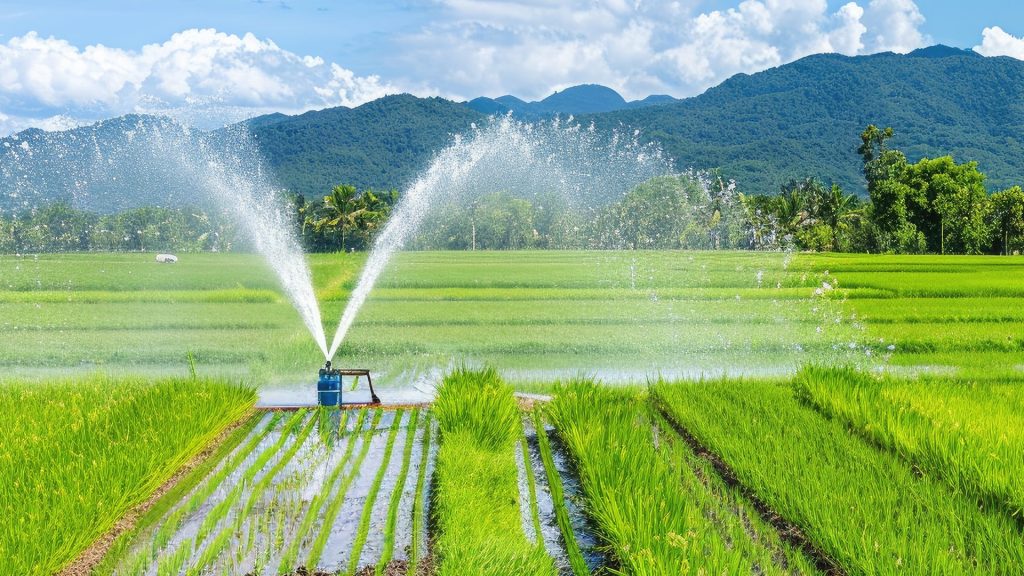
Two of the most costly and time-sensitive challenges in agricultural production share a common thread: moving water reliably in environments where infrastructure is limited and failure is expensive. Livestock operations that cannot deliver adequate clean water to animals across distributed pasture systems face health consequences that translate directly into production losses. Crop producers facing saturated fields and ponded surface water after heavy rainfall events face lost planting windows, delayed applications, and soil compaction from wet-field equipment entry that damages yields for the current season and beyond. In both cases, the pump at the center of the water management system is not a background equipment item. It is a critical operational asset whose reliability determines whether the farm loses a day or loses a season.
These applications differ fundamentally from the agricultural chemical and fuel transfer operations that receive more attention in equipment discussions. Livestock watering and field drainage involve moving clean water, not chemically aggressive agricultural inputs. But the operating environments — remote pastures without power infrastructure, low-lying fields after storm events, irrigation sumps serving large acreages — create their own set of demands on pump equipment, particularly around driver flexibility, portability, and durability in wet and outdoor conditions.
Livestock Watering: Reliability Across the Pasture System
Cattle, hogs, and poultry require reliable daily water access at volumes that make pump failure a serious livestock management emergency. A mature beef cow requires 20 to 30 gallons of water per day under normal temperature conditions, climbing toward 50 gallons per day during summer heat. A 400-head beef operation distributed across a multi-paddock rotational grazing system requires consistent water delivery to troughs in each paddock — which means moving water from wells, storage ponds, rural water pipelines, or holding tanks to distributed points across a pasture system that may span hundreds of acres.
The NRCS Conservation Practice Standard for Watering Facilities (Code 614) establishes the federal framework for designing and installing livestock watering infrastructure, emphasizing adequate water quantity and quality, distributed placement to promote even grazing across the pasture, and durable construction appropriate to the expected lifespan of the system. The standard specifically addresses the livestock productivity and water quality benefits that reliable distributed watering infrastructure provides — including reduced pathogen loading from animals congregating in ponds and streams, improved grazing distribution, and reduced bank erosion from livestock stream access.
Moving water to distributed troughs across large pasture systems requires pump infrastructure that operates where the water source and the watering points actually are, not where electrical grid infrastructure happens to be available. Remote paddocks without power access are served by hydraulic-driven pumps that use tractor hydraulic systems as the power source, or by gasoline-engine-driven portable units that require no fixed infrastructure at all. Permanent installations near barns, holding areas, and wells are well-served by electric pump configurations that operate continuously with minimal intervention.
For the full range of agricultural pump applications — including chemical transfer, nurse trailer operations, and machinery refueling — see Ag Pumps: The Complete Guide to Agricultural Pump Applications for Modern Farms in 2026.
Thermoplastic construction matters in livestock watering applications for a different reason than in chemical transfer. The concern here is not corrosion from aggressive chemistry — it is contamination of drinking water from metal oxidation within pump components. Metal pump housings and impellers that corrode in the presence of moving water introduce iron, rust particulates, and other metal compounds into water flowing to animal troughs. Thermoplastic construction eliminates that contamination pathway, delivering clean water without introducing products of metal degradation into supply intended for animal consumption.
Field Drainage and the Cost of Lost Time
Every planting season includes wet periods that create saturated field conditions. In years with above-average spring rainfall, those periods can extend long enough to threaten planting windows entirely. The relationship between soil moisture and crop yield begins with planting date — delayed planting from wet field conditions reduces potential yield in corn, soybeans, and other row crops through compressed growing seasons and reduced heat unit accumulation. The further into the optimal planting window a producer is pushed by saturated soils, the greater the potential yield loss even if the crop is eventually established.
The NRCS Conservation Practice Standard for Subsurface Drain (Code 606) addresses the design and installation of subsurface drainage systems that lower water tables and improve soil aeration for crop root zone development. In fields where subsurface drainage infrastructure exists, pump-assisted drainage outlets manage water table elevation throughout the growing season, accelerating the removal of excess moisture during wet periods and enabling earlier field entry for planting and application equipment.
In fields without subsurface drainage — and particularly in low-lying areas, field edges adjacent to drainage ditches, and areas with restricted soil permeability — surface ponding after heavy rainfall events requires active pumping to remove standing water before field operations can resume. A portable pump that can be positioned at the lowest point of a ponded field, run off a tractor hydraulic system or a gasoline engine without requiring electrical hookup, and moved between locations as drainage needs shift across the operation provides exactly the flexibility that field drainage after storm events demands.
Ponded Fields: Speed Is the Asset
The economic case for rapid ponded field recovery is straightforward: every additional hour that surface water remains on a field after a rainfall event extends the moisture saturation of the soil profile beneath it, delays the drying-out process that enables field entry, and pushes equipment operations further past optimal timing windows. A pump capable of moving several hundred gallons per minute from a ponded field surface into an adjacent drainage ditch or waterway can recover field access hours or days before passive drainage would accomplish the same result.
Speed matters most during the compressed windows that define agricultural production — the two to three week optimal planting window, the narrow herbicide application timing that pre-emergent chemistry requires, and the harvest window where delayed field entry from wet conditions can mean crop quality losses from delayed combining. The pump supporting ponded field recovery is not being asked to transfer a precise measured volume. It is being asked to move as much water as possible, as fast as possible, from where it is doing damage to where it can drain away.
The full picture of how ag pumps serve the chemical transfer and refueling demands that accompany field operations is detailed in Ag Pumps for Nurse Trailers, Pesticide Transfer, and Refueling Farm Machinery in 2026.
Hydraulic-driven pumps sized for high-volume drainage flow — operating off a tractor hydraulic system that can be positioned anywhere in a field without external power — address this need directly. They bring the power source to the problem rather than requiring the problem to be within reach of fixed infrastructure. For operations that need to move equipment between multiple drainage points across a large field complex during or after storm events, this portability is the defining operational characteristic.
Pacer Pumps: Built for Livestock Watering, Drainage, and Field Recovery
Pacer Pumps has engineered agricultural water management pumps for 52 years, serving livestock operations, row crop drainage applications, and ponded field recovery across diverse farm environments. Thermoplastic construction provides clean water delivery for livestock watering without metal contamination risk, and durable performance in wet outdoor drainage environments. Multiple driver options — electric, gasoline, and hydraulic — match the power source to the installation environment, from barn-side electric watering systems to remote hydraulic-driven drainage operations in fields miles from any grid connection.
Our Products Include:
- Ag Transfer Pumps — Thermoplastic ag pumps with electric, gasoline, and hydraulic driver options for livestock watering, drainage, and field water management
Ready to Solve Your Water Management Challenges? Contact Pacer Pumps to discuss the right pump for your livestock, drainage, and field recovery needs.
Works Cited
“Watering Facility (No.) (614) Conservation Practice Standard.” Natural Resources Conservation Service, U.S. Department of Agriculture, www.nrcs.usda.gov/resources/guides-and-instructions/watering-facility-no-614-conservation-practice-standard. Accessed 19 Feb. 2026.
“Subsurface Drain (Ft.) (606) Conservation Practice Standard.” Natural Resources Conservation Service, U.S. Department of Agriculture, www.nrcs.usda.gov/resources/guides-and-instructions/subsurface-drain-ft-606-conservation-practice-standard. Accessed 19 Feb. 2026.
Related Articles